The Rouen mint and the letter B
Le Havre never had a mint. The one in Rouen, further up the Seine, struck coins, with interruptions, from the Carolingian deniers of the 9th century to the bronze coins of 1857. From 1540, its coins carry a letter: B.
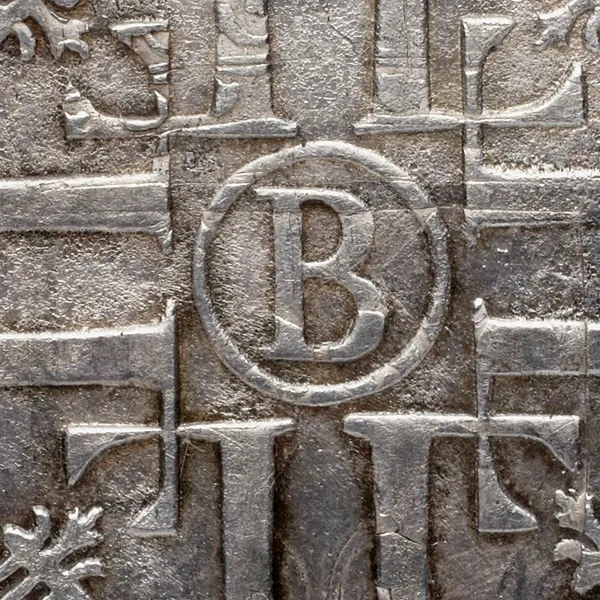
B, the mark of Rouen
In 1540, under Francis I, each mint in the kingdom was given a letter. Paris took A, Rouen took B. Before that, a mint could only be recognised by a secret dot placed under a given letter of the legend.
On royal coins, look for the B on the reverse: below the shield of France on the testons of Henry II, in the centre of the cross of L on the écus of Louis XIV, next to the rooster on the constitutional écu. On 19th-century franc coins, the B comes just after the date or below the eagle. It is often small: a loupe helps.
The letter tells you where the coin was struck. For the same type and year, the mints did not strike the same quantities: the letter is part of the identification, just like the date. One trap: in the 20th century the letter B was used again, for the Beaumont-le-Roger mint (Eure), opened during the Second World War. A B on an aluminium coin from the 1940s or 1950s does not come from Rouen.
| Letter | Mint |
|---|---|
| A | Paris |
| AA | Metz |
| B | Rouen |
| BB | Strasbourg |
| D | Lyon |
| H | La Rochelle |
| I | Limoges |
| K | Bordeaux |
| L | Bayonne |
| M | Toulouse |
| MA | Marseille |
| Q | Perpignan |
| T | Nantes |
| W | Lille |
Coins struck in Rouen
-
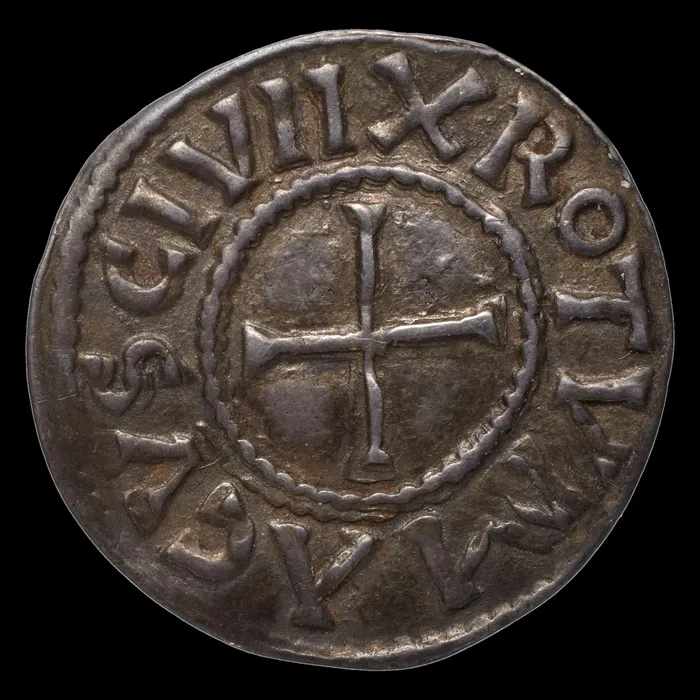
Photo: National Library of France (BnF) (Gallica), public domain, via Wikimedia Commons, cut out on a black background. 9th centuryThe “Rotomagus” denier
Under Charles the Bald, the Rouen mint struck silver deniers. On the reverse, around the cross, you can read the Latin name of the city: ROTVMAGVS.
-
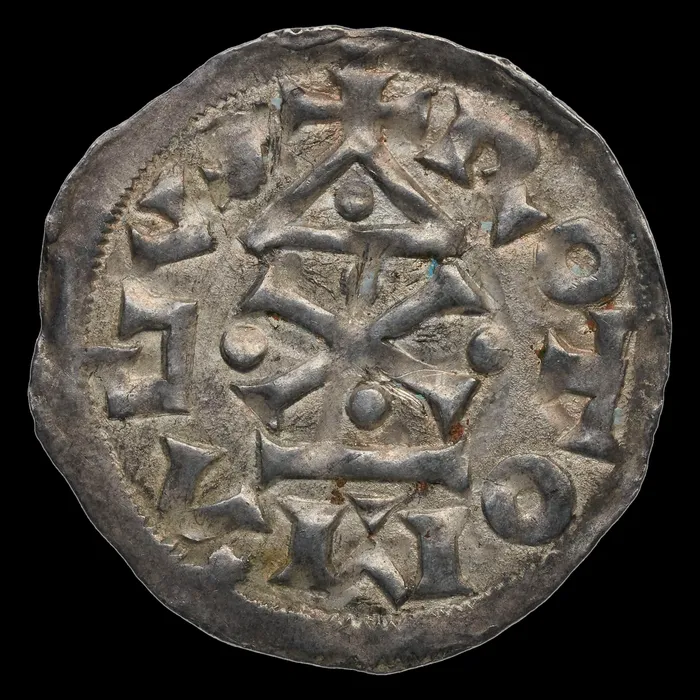
Photo: National Library of France (BnF) (Gallica), public domain, via Wikimedia Commons, cut out on a black background. 10th centuryThe deniers of the dukes of Normandy
Rouen became the capital of the Duchy of Normandy. Duke Richard I had his own deniers struck there, in the name of the city. The hoard found at Fécamp in 1963 held thousands of them.
-
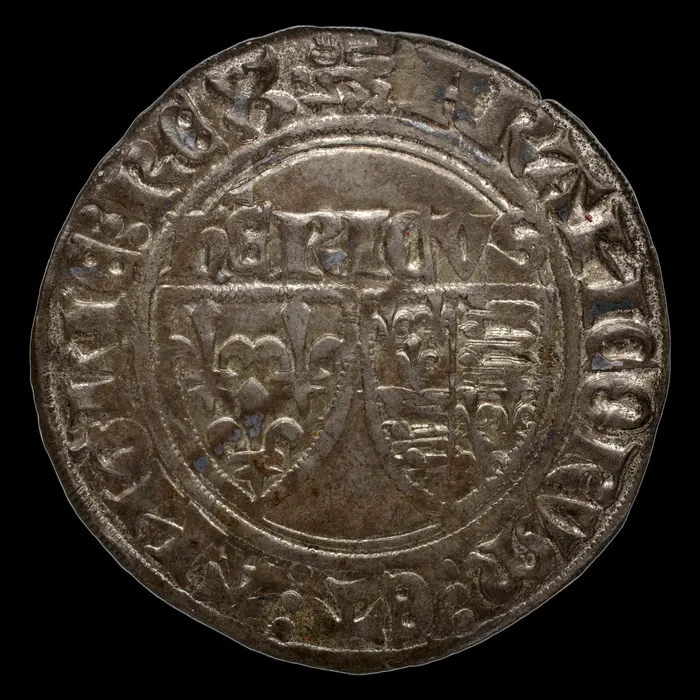
Photo: National Library of France (BnF) (Gallica), public domain, via Wikimedia Commons, cut out on a black background. 1419-1449The blanc of Henry VI
During the English occupation in the Hundred Years' War, the mint struck coins in the name of Henry VI, King of England. The shields of France and England sit side by side.
-
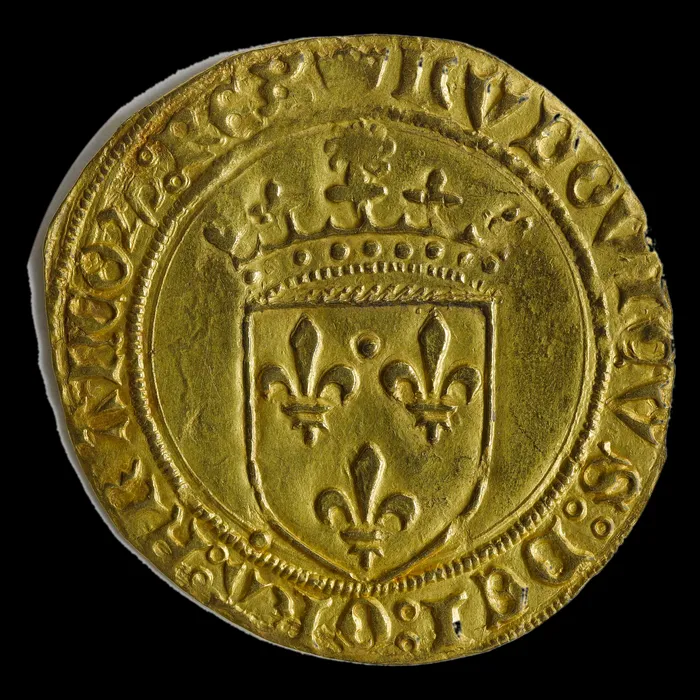
Photo: Musée Carnavalet, Paris Musées, CC0, via Wikimedia Commons, cut out on a black background. from 1475The gold écu au soleil
Back under the King of France, Rouen also struck gold. On this écu of Louis XI, a small sun sits above the crown. Before 1540, the mint can only be identified by a secret dot placed under one letter of the legend.
-
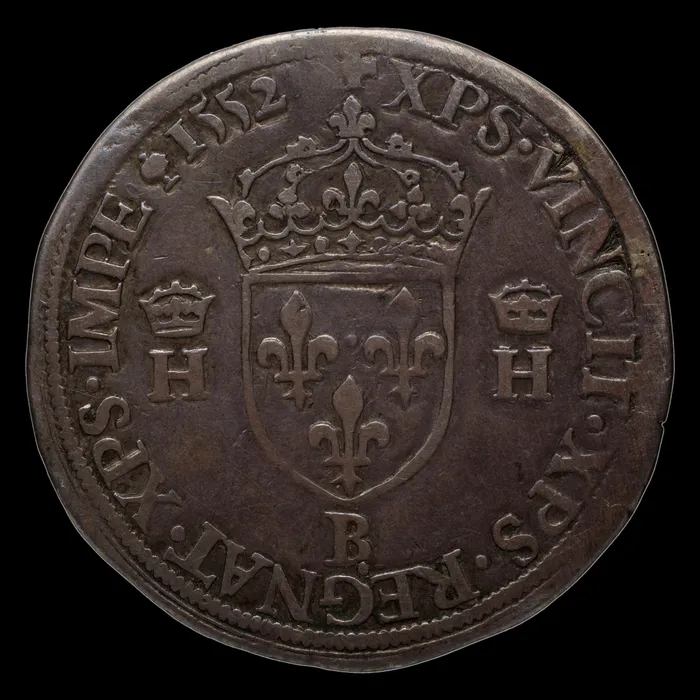
Photo: National Library of France (BnF) (Gallica), public domain, via Wikimedia Commons, cut out on a black background. 1552The teston of Henry II
From 1540, each mint has its letter. Rouen's is B, engraved here below the shield of France, between the two crowned H.
-
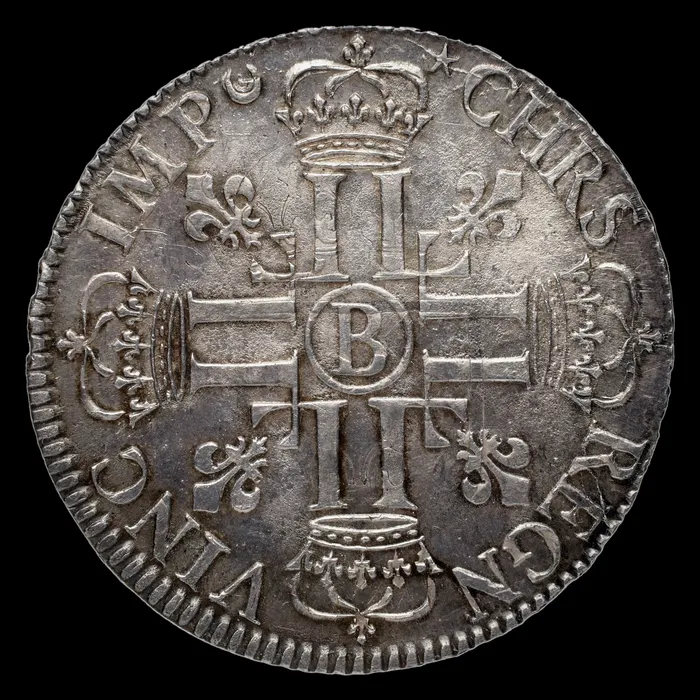
Photo: National Library of France (BnF) (Gallica), public domain, via Wikimedia Commons, cut out on a black background. 1691The écu with eight L
On this silver écu of Louis XIV, the letter B sits in the centre of the cross formed by the crowned L.
-
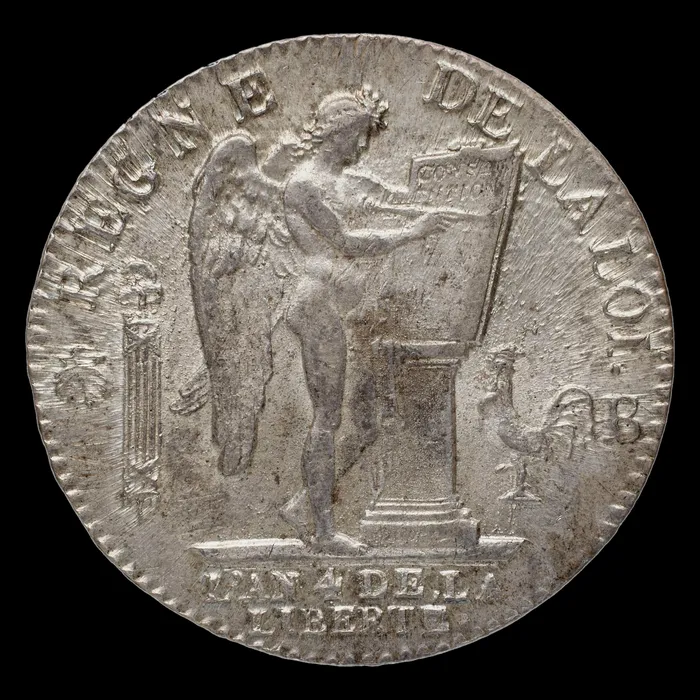
Photo: National Library of France (BnF) (Gallica), public domain, via Wikimedia Commons, cut out on a black background. 1792The constitutional écu
During the Revolution, the Genius engraves the Constitution. The letter B is on the right, after the rooster.
-
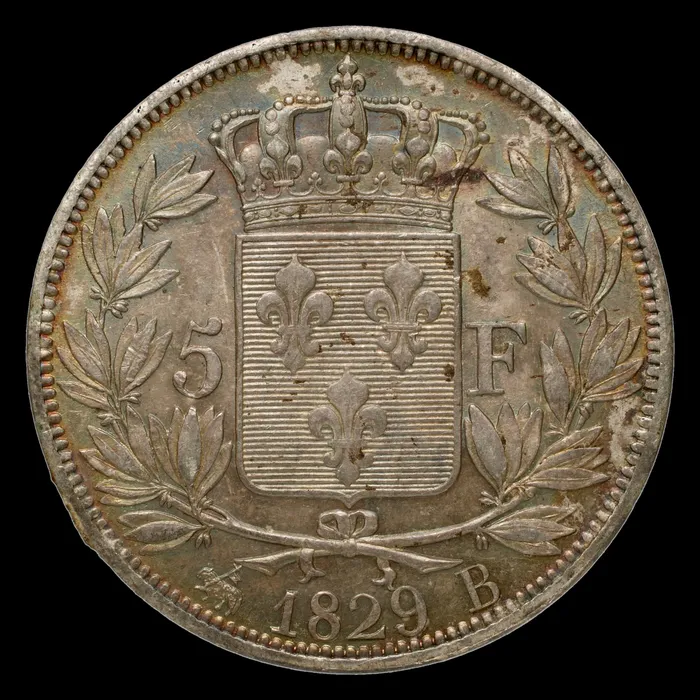
Photo: National Library of France (BnF) (Gallica), public domain, via Wikimedia Commons, cut out on a black background. 1829The 5 francs of Charles X
Reopened in 1803, the mint struck franc coins for each regime. On this 5 francs écu, the B follows the date.
-
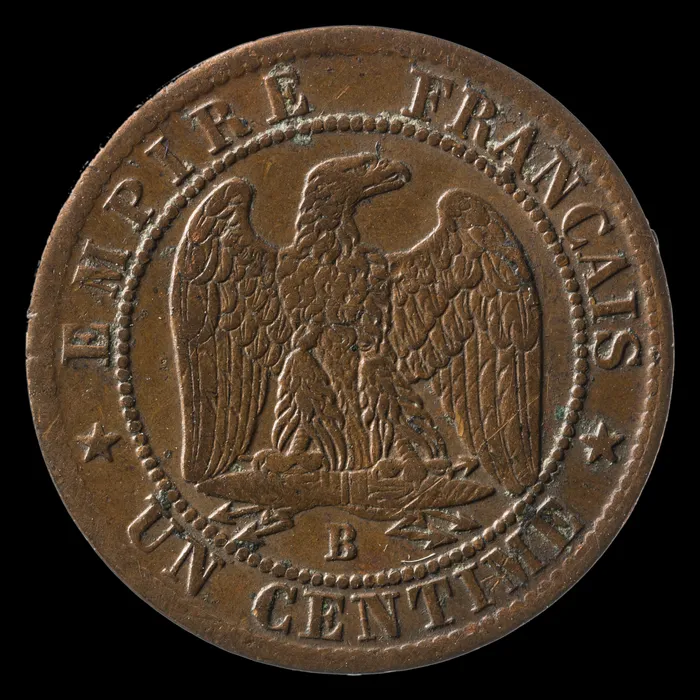
Photo: Musée Carnavalet, Paris Musées, CC0, via Wikimedia Commons, cut out on a black background. 1853-1857The last bronzes
For Napoleon III's new bronze coinage, Rouen was brought back into service. The B is below the eagle. The last coins are dated 1857 and the mint closed in 1858.
Rouen and Le Havre
When Francis I signed the founding charter of the port of Le Havre, on 8 October 1517, the Rouen mint had already been striking coins for several centuries. The same king gave Rouen its letter B in 1540.
The Pays de Caux has also yielded direct evidence of the mint. The Fécamp hoard, buried around 980-985 and found in 1963, held thousands of coins, mostly in the name of Duke Richard I, among them deniers struck in Rouen.
The mint in the city
A 12th-century charter mentions a mint house near rue Ganterie. The later Hôtel de la Monnaie stood between rue Saint-Éloi and rue Herbière. The part on rue Saint-Éloi is thought to date from the last third of the 16th century; a wing on rue Herbière was added under Louis XIII. King Louis-Philippe visited the Rouen mint in 1831; a commemorative piece kept at the Musée Carnavalet records the visit.
After the closure, the building became a customs barracks. It was partly demolished in the early 20th century, then destroyed in the bombing of 1944. The carved coat of arms of France from its inner courtyard is kept at the Musée des Antiquités in Rouen.
Coins to check for a B
- Louis d'or and half louis (in French)
- Royal silver écus (in French)
- Liards, deniers and sols (in French)
- 5 francs silver écus (in French)
- 20 francs gold, Louis XVIII, Charles X, Louis-Philippe (in French)
- 40 francs gold (in French)
Frequently asked questions
What does the B on my coin mean?
On a royal coin from after 1540, or on a 19th-century franc coin, the B stands for the Rouen mint. On an aluminium coin from the 1940s or 1950s, it stands for the Beaumont-le-Roger mint, in the Eure.
When did the Rouen mint close?
The last coins struck in Rouen are Napoleon III bronzes dated 1857. The mint closed for good in 1858.
Is a Rouen coin rarer than a Paris one?
Not necessarily. It depends on the type and the year: what counts is how many coins that mint struck for that date. Show us the coin during a valuation: we look at the date and the letter together.
Before 1540, how can I tell a coin comes from Rouen?
On Carolingian and ducal coins, the city's name often appears in the legend: ROTVMAGVS or ROTOMAGVS, the Latin name of Rouen. On late medieval royal coins, the mint is identified by a secret dot under one letter of the legend, which calls for a specialised catalogue.
Can the Rouen mint building still be seen?
No. The building, between rue Saint-Éloi and rue Herbière, was destroyed in the bombing of 1944. Only its carved coat of arms survives, in the Musée des Antiquités in Rouen.