Liberty or Indian: telling them apart
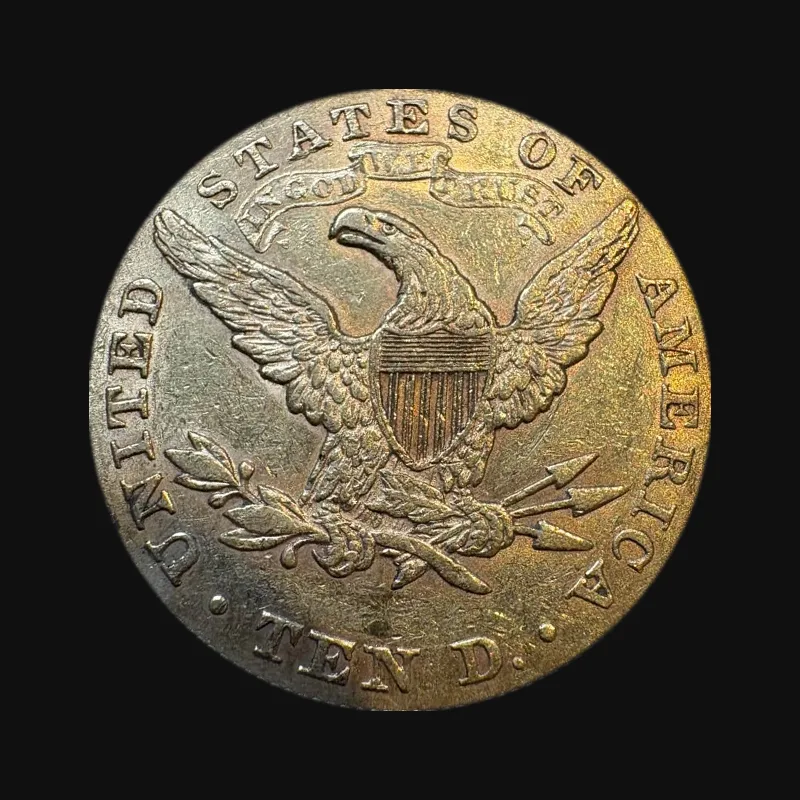
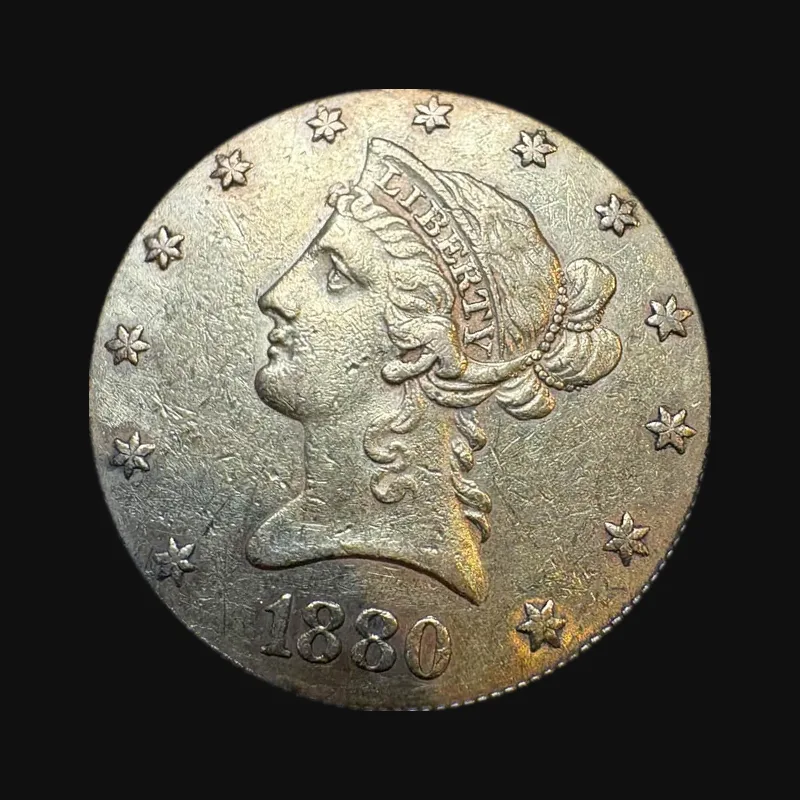
A first glance is enough. The Liberty of the Liberty type wears a simple coronet and a bun; the Liberty of the Indian type wears a large feathered headdress. On the reverse, the Liberty-type eagle holds a branch and arrows in its talons; the Indian-type eagle stands on a sheaf of arrows.
The edge confirms it. It is reeded on the Liberty type. It carries raised stars on the Indian type: 46 until 1911, 48 afterwards.
Then there is the motto. On the Liberty type, IN GOD WE TRUST arrives in 1866, on a scroll above the eagle: an earlier coin has none. On the Indian type, Saint-Gaudens had left it out; the public complained and Congress restored it in May 1908. Coins of 1907 and part of those of 1908 therefore have no motto.
Not to be confused with the $5 and $20
The $5 (half eagle) and the $20 (double eagle) use the same designs in the same period. Only measurement settles it beyond doubt:
- $5: 8.359 g, 21.6 mm;
- $10: 16.718 g, about 27 mm;
- $20: about 33.44 g, 34 mm.
The value is also written on the reverse: “TEN D.” on the Liberty type, “TEN DOLLARS” on the Indian type. Other foreign coins are presented in the foreign coins section.
Known fakes and simple checks
Fake eagles exist for both types. NGC has described several, including an 1899 Liberty and a 1912 Indian, both struck in gold and at the right weight. Scales alone are therefore not enough. These copies give themselves away through soft or rounded details, small lumps in the fields, spikes on the rim or tool marks where the counterfeiter touched up the dies.
A few simple steps already rule out crude copies:
- Weight: on scales accurate to 0.01 g, a genuine coin is around 16.7 g; a worn coin may lose a little.
- Diameter: about 27 mm with a caliper.
- Magnet: gold is not attracted; a coin that sticks to a magnet is fake.
- Sound: balanced on a fingertip and tapped lightly, a solid gold coin rings for a long time; a dull sound should raise a flag, without proving anything on its own.
- Consistency: a motto on a Liberty before 1866, a CC mark after 1893, a D mark before 1906 or a reeded edge on an Indian condemns the coin.
The guide how to spot a fake coin explains the method step by step.
Judging wear
On the Liberty type, wear first hits the tip of the coronet and the hair above the eye, then the strands above the coronet. On the reverse, look at the wing tips and the eagle's neck: they are the first places to flatten.
On the Indian type, look in the same way at the highest points, such as the feathers of the headdress and the cheek, then at the eagle on the reverse. A ×10 loupe helps a great deal.
Many eagles have been mounted as jewellery or cleaned. A solder mark, a filed edge or an overly even shine can be seen under a loupe. Never rub a coin: the grading scale is explained in grades of preservation.